Uncomfortable truths about BDSM
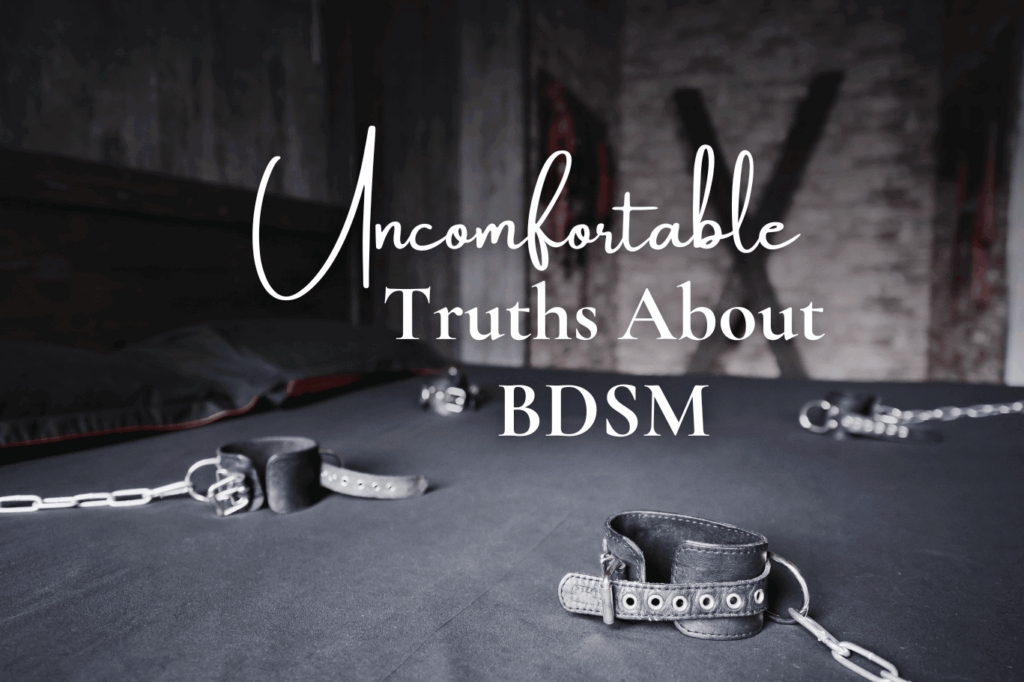
Like the title says, I’m going to be talking about some hard truths in this post. If that triggers or unnerves you in any way, I encourage you to skip this post.
I recently came across an Instagram post where someone called out submissives for “poor communication and half-hearted honesty,” and some of the comments she got accused her of sub-shaming.
It struck me how often there’s this idea that submissives can’t do anything wrong because they’re the ones giving up control and that if a Dom makes a mistake, it must be abuse.
That made me think of my first book, Not Yours to Keep, which explores the emotional chaos of a threesome dynamic. I got a fair share of negative responses because one of the Doms repeatedly messed up and caused serious emotional harm to the sub. And yes, the dynamic in that book definitely isn’t how it should be, but real life doesn’t always go the way you want it to, no matter how good the intentions are.
Some people seem to insist that BDSM is this picture-perfect thing where the consent is always crystal clear, every scene is like a dream, and mistakes are a foreign concept because you have communicated and negotiated beforehand. Anything that doesn’t fit this idea is not BDSM. If that’s the case, I have no idea what BDSM is despite having lived the lifestyle for ten years. And if that’s the case, BDSM is not human.
BDSM is full of risks, ups and downs, and mistakes. I’ve explored new things where my partners and I did everything right—lots and lots of communication, going slow, getting good aftercare in the aftermath. Even so, it brought me so deep into subdrop that I wondered whether it was worth it, despite the incredible highs.
So now, I want to show you the uncomfortable but very real side of things.
Mistakes Can and Will Happen
Even though you do everything in your power to make a scene safe, sane, and consensual, mistakes will happen and scenes will go wrong. Subdrop might hit just when the fun has begun. You could get dizzy from a weird position and your Dom has to cut all the pretty ropes. Irrational emotions might bubble up and cause you to say or do something you regret. Or something might trigger you mid-scene—something you had no idea was even a trigger.
Even good communication and negotiation can’t fully prevent mistakes. We’re all human—complex beings with complex emotions. Missteps are part of the human experience, and that applies to BDSM just as much as to any other part of life.
This is not saying that you shouldn’t take precautions, negotiate, and play safely, because doing so can make the difference between a scene ending with tangled emotions or a trip to the emergency room.
When things go wrong, the best thing you can do is to take care of each other and communicate. Cliché, I know. But there’s a reason it has become a cliche. It works!
Just remember, good communication isn’t about throwing blame or stepping away from all responsibility. Which brings me to the next part.
Submissives Have Responsibility Too
It’s easy to think that because the Dom holds the power and is in control, he’s the only one responsible if a scene goes wrong—and the only one who can cause harm.
This couldn’t be further from the truth.
First and foremost, your responsibility as a sub is to communicate your boundaries and needs openly and honestly. What types of play are you comfortable with? Which ones are maybes? Which are a firm no? What kind of aftercare do you need—just a little cuddling, contact over the following days, or physical support if you experience a delayed drop?
I know, I’m repeating the cliché again, but communication really is key.
If you’re new, you might not know all these things, and that’s okay. Your responsibility then is to communicate your inexperience, so your Dom knows to go slow.
Also, you’re just as responsible for your Dom’s emotional safety as he is for yours. That means listening to and respecting his boundaries, giving him the information he needs to make a scene not just safe, but fun for you, and showing him that you’re capable of using your safeword (if you are!).
Imagine being a Dom and not knowing whether the sub can or will use her safeword. That kind of uncertainty can make it nearly impossible to relax and enjoy the scene. It’s like fumbling in the dark.
Some subs struggle with using a safeword, and if that’s the case, it’s essential to discuss alternative ways to communicate and maintain safety.
For me, my safeword is a last resort, used only if something really goes wrong. I’m one of those subs who feels like using a safeword is taking control of the scene. That doesn’t mean I wouldn’t use it if needed, or that I can’t communicate how I’m feeling.
Instead of using my safeword, I’ll simply say “pause” or explain what’s not working. When I do say “pause,” my Dom immediately stops and checks in—not because I’m taking control, but because he cares. In our dynamic, “pause” functions like “yellow” in the traffic light system, so I guess it is a kind of safeword.
If you’re comfortable using your safeword, please do! You’re not less submissive for doing so.
Doms Are Not Mind Readers
We’d all love it if the Dom instinctively knew exactly what makes us melt into a puddle at his feet. Honestly, he would love that too. Trust me!
But Doms aren’t mind readers. We have to tell them what we like and don’t like. Sigh.
Sometimes, it does feel like my Dom of ten years can read my mind. He knows my reactions, understands what every little sound or movement means. That allows us to play at the edges, pushing boundaries, and exploring CNC (consensual non-consent).
But even so, we know that he can’t actually read my mind, and we never stop communicating. And why would we? We love talking about our scenes—what was amazing, what didn’t work, why those exact two words drove me wild with lust.
Getting to that kind of trust and rhythm takes time and effort. But no matter how close you are, no matter how long you’ve been playing together, open, honest communication and mutual respect remain crucial. People change. Kinks change. Boundaries shift. Not every scene will hit the same. When something feels off, take the time to talk about it and learn from it.
Please play responsibly and take care of both yourself and your partner.
I truly hope I didn’t offend anyone by writing this. That’s not my intent. If you felt called out, please know we all make mistakes. The most important thing is not whether we make them but that we recognize them and learn from them.